
Report
Global education and technology: digital challenges associated with the effective delivery of transnational education
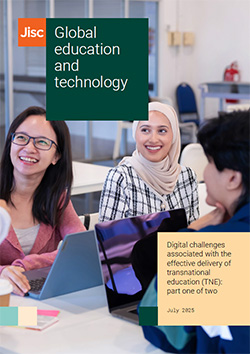
This is the first of two reports that investigate the digital experiences of transnational education students and staff. The second summarises primary research findings from lived digital experiences of more than 5,000 TNE students and staff in 30+ countries, and makes recommendations to the sector.
With one in five registered UK students in transnational education (TNE), TNE is increasingly central to the strategic vision of many UK higher education institutions, with some universities having larger cohorts of transnational education students than domestic UK students. According to student open data figures on transnational education from the Higher Education Statistical Agency, also part of Jisc, in 2023/24 there were 611,725 undergraduate and postgraduate taught TNE students learning outside the UK.
Developed in partnership with 21 higher education institutions, the global education and technology report (part one of two) shines a light on the often-overlooked staff and student experiences of those in transnational education and highlights the digital barriers affecting global learning.
pdf, 4.1MB, 44 pages
Four key digital challenges in transnational education
Technology and connectivity
Over half the UK higher education institutions consulted for the report identified power outages, unreliable internet and limited access to suitable devices. Reliable access to electricity and the internet cannot be assumed in many transnational education host countries.
Access to learning resources
Licensing restrictions for software and digital content can create challenges for transnational education, such as how a student is defined as belonging to a university. This can add significant costs or restrict student access to course resources.
Cultural differences in using digital in education
Institutions can face challenges in explaining UK-created assessment practices, the cultural appropriateness of UK-created teaching materials, and the appropriate use of generative AI.
Digital skills and capabilities
Expectations about how to participate and engage during online learning pose challenges for students as well as ensuring both students and staff have the digital skills necessary for equitable access to learning.
Reinforcing the importance of a positive transnational education digital experience, a 2024 HEPI report on the student experience of transnational education by Professor David Carter, University of Reading, notes:
“Behind the numbers, there is a bigger story to be told about students in transnational education, such as who they are, how they learn and what changes in their lives as a result of their higher education.
“Better public information about TNE students will increase their profile and provide assurances about the quality of transnational education.”
Jisc is working in partnership with UUKi, the British Council and the Quality Assurance Agency (QAA) to support the sector in addressing these challenges.
This initial global education and technology report is followed by part two that explores these challenges via the personal experiences of students and staff from across 50 different global instances of UK transnational education.
Stay informed
- This report results from our third phase of research. Read our earlier reports and briefing papers on the digital experiences of international students studying in the UK
- Read our guidance for university leaders: delivering digital equity in transnational education
- Register your interest to join our international students’ digital experience mailing list so that we can keep you up to date with our research, send you future publications, and invite you to attend our working group meetings.
About the author