Aviation and the immersive experience: how airship history is inspiring future engineers
As immersive technology is increasingly being used to rethink learning and teaching, one project being presented at Digifest 2026 combines engineering, history, and innovation.
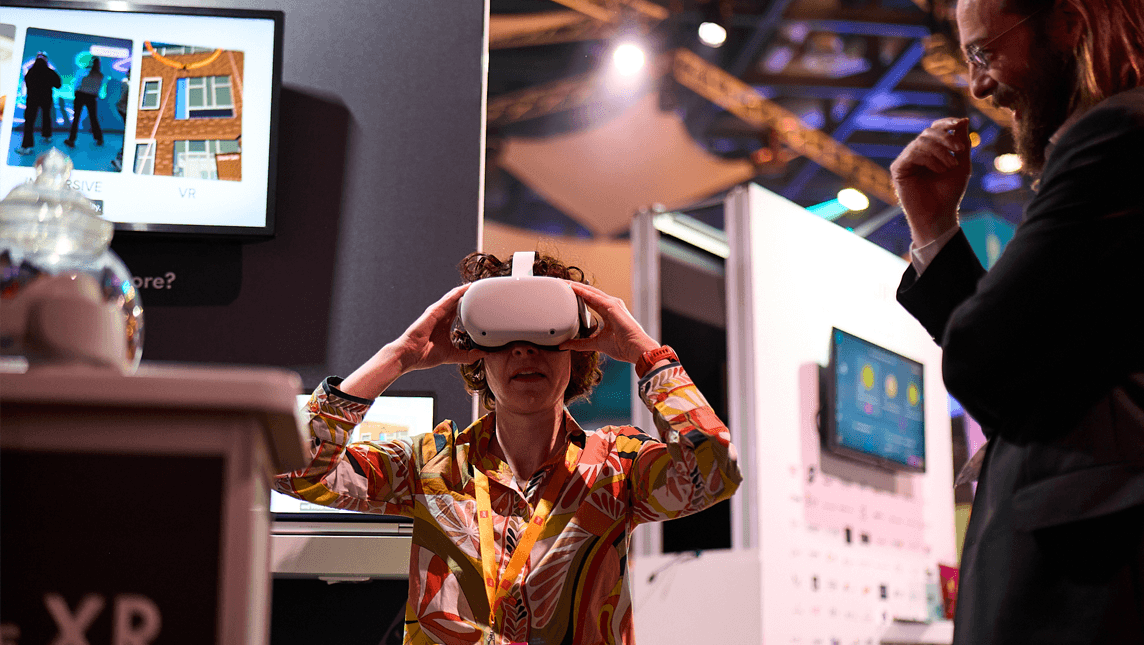
Airships XR is a project which aims to disrupt how aviation engineering principles are taught, with its origins rooted in history. By using storytelling and immersive content delivery, the project turns these teachings into emotionally resonant experiences.
In the 1920s, airships represented the future of carbon-neutral air travel and Bedford was being introduced by the UK Government as a global hub for a bold new era of aviation.
But in October 1930, tragedy struck when the R101 airship crashed on its maiden voyage from Bedford to Karachi, killing 48 people, and ending the Bedford airship programme virtually overnight.
The R101 disaster is a powerful reminder of what can go wrong when political pressure, personal ambition, and public expectations outweigh sound engineering and safety. The tragedy didn’t come from a single mistake; it was the result of several serious issues piling up. These included relying on heavy, unreliable diesel engines, making risky structural changes that reduced the ship’s buoyancy, conducting only a brief 17‑hour trial flight, and ignoring expert warnings about whether the airship was truly safe to fly.
Airships XR turns this historical story into a hands‑on learning experience. Using a series of Extended Reality (XR) models of the R100 airship, and elements from its design, the project gives students a series of interactive spaces where they can explore key engineering ideas such as buoyancy, dynamic lift, and mechanical design by seeing them in action.
By blending arts with STEM (STEAM) and linking lessons from the past to modern sustainable airship technologies, the initiative aims to inspire the next generation of engineers in a fresh and meaningful way.
History through immersive technology
Dr Atif Ghani, lecturer research on the MFA and in digital direction at the Royal College of Art, started to really look at immersive technology in 2018, after two decades in TV and film production.

Dr Ghani said:
“At that time, I was very much an education technology producer and had been working in the film and television sector for about 25 years. It was clear that things were changing in that landscape and I started to think a lot about how we speak to young people and what engages them."
“And so that got me thinking about XR technologies as a way to communicate - real-time gaming technology, 3D art, but really the emerging immersive space. I found there was a lot of immersive content that was future-gazing, but I was surprised to see that people were also using this technology to look back, to take a historical place in time and effectively step into history.”
As the immersive space - VR, AR, and mixed reality experiences - was still quite fresh and the rules of storytelling were still unknown, when a friend of Dr Ghani’s asked if he was familiar with the history of airships, his interest was piqued. Once he started to look into it and learn more about the Imperial Airship Programme, he was able to see how well it would lend itself to an immersive learning experience.
As the project began, the focus was to ensure the gamification and technology didn’t become the main attraction. Instead, the team used them purposefully to deepen the narrative and give audiences a meaningful way to step back in time. The goal was always to let the story lead, with the technology enhancing the experience rather than overshadowing it.
Stepping inside the airships
Dr Ghani worked alongside a team from Bedford Creative Arts to take a multimodal approach to storytelling. Rather than funnelling people into a single platform or experience, they created a range of ways to explore the same history. Aware that not everyone wants to wear a headset and keen to make the experience as inclusive as possible, they knew they wanted to offer different paths into the story, including easily accessible web-based content.
One strand of the work included mixed reality experiences built around a large‑scale airship model. Visitors could walk around the airship, tap on floating information bubbles, and watch short documentary-style video clips featuring experts discussing its design decisions, engineering challenges, and ultimate failures. They also incorporated interactive 3D objects, which often catch people by surprise and make the learning experience feel more vivid.
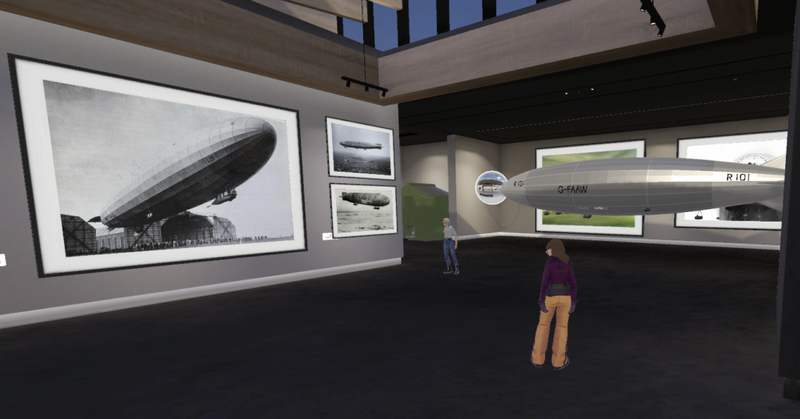
Alongside this, the team created a web‑based digital gallery. When viewed in VR on-site, images appear at a true-to-life scale, which feels like stepping into a real exhibition space and makes an enormous impact. On a regular screen it feels more like exploring a beautifully designed digital museum, but in VR the atmosphere becomes immersive and almost tangible.
The project also experimented with small augmented‑reality experiences, including prototypes built in Snapchat, the idea being to reach young people through the tools they already use. These bite‑sized experiences allow people to dip in and out, supported by team members who can guide them when needed.
The final step was to extend the experiences into public spaces with large airship models outside museums, where visitors can explore, listen to audio narration, and interact with the story in a more physical way. This ability to shift between digital immersion, real‑world objects, and human conversation is crucial.
Dr Ghani said:
“We created a time simulator. A digital twin of the engine cabin, and a one-to-one environment so that people can go inside the engine cabin and feel what it would have been like. It allows people to simulate the job of an engineer, making sure the engines are working for a seven-hour shift. It’s still animated but it really creates the feeling of being there.”
Co-designed with young people, STEAM students, aviation engineers, and digital artists, the project celebrates the past while inspiring future careers in innovation, creativity and engineering with the following goals:
- To teach engineering and physics principles by allowing students to interact with a comprehensive digital twin of an airship in an XR environment
- To address the UK's critical STEM graduate gap of 60,000 per year, where 46% of employers report recruitment difficulties
- STEAM Integration: To integrate arts into STEM education, bringing together design and engineering professionals to create a holistic learning experience
Community learning
One of the biggest takeaways from the project so far has been the way it has engaged the Bedford community. The area has two large airship sheds, one of them now being used as a film studio, but when Dr Ghani asked people what they knew about the original use of the premises, the answer was ‘very little’. After visiting the project through the immersive technology, by the end of their experiences, the community had gained that local knowledge and suddenly the experience connected more strongly to the physical locations.
“It's been really positive, the location-based nature of building these experiences which resonate with communities. Making connections to dynamic lived stories that we're surrounded by, but finding a way to tell them, energise them, and to present them with scale and ambition. People really appreciate that."
The future of the project will see these immersive experiences continue to tour museums, schools, and pop-up events across Bedford and beyond from spring 2026. Dr Ghani is also looking forward to sharing the project and its learnings at Digifest this year.
He said that object‑based learning is at the heart of his work: put a meaningful object at the centre, and multiple learning journeys naturally unfold around it. Anchored in physical or virtual space, an object becomes a catalyst for curiosity and understanding.
“When I share the project with people, I really want them to feel the different pathways we’ve created - from the mixed reality moment that stops you in your tracks to the digital gallery that invites deeper exploration. Each one opens a unique way into the story and helps people to understand the richness of what’s possible.”