Jisc's demonstrating digital transformation series: the importance of putting people at the heart of change
Sarah Knight, our director of digital leadership and transformation, reflects on the key themes of the fourth series of our demonstrating digital transformation events.
Author

Sarah Knight
Director of digital transformation (HE)

Hosted with three partner institutions – Queen’s University Belfast, the University of Westminster and the University of Southampton – the series enabled open, peer-led discussion on the realities of digital transformation. There were more than 200 attendees across the series, with strong representation from senior leaders.
While AI continues to attract significant attention across the sector, a more mature understanding of digital transformation is emerging – one that recognises technology as only one part of a broader organisational change agenda. A strong theme across all three events was how change should be led by people, not technology – successful transformation depends less on the tools deployed and more on the capabilities, culture, and confidence of the people using them.
This aligns strongly with our long-standing emphasis on digital capability as a strategic enabler of institutional resilience and innovation. At all three events, I was struck by how effectively the senior leaders hosting them placed organisational culture and digital capability at the centre of their digital transformation strategies.
Innovation driven by meeting genuine need
The event at Queen’s University Belfast focused on how the university is using our framework and maturity model for digital transformation, along with our beyond blended resources for learning and curriculum design.
Professor Phil Hanna shared how Queen’s is supporting staff with the intentional and considered use of AI in their teaching, and how staff are rethinking their approaches to assessment in response to the challenges and opportunities AI presents, with a focus on authentic assessment design. A central message from the event was that generative AI is lowering the barrier to innovation. Staff no longer need advanced technical skills to build digital tools, as ideas can now be translated directly into working solutions using natural language. The ability to prototype and iterate quickly is also accelerating experimentation, allowing institutions to test and refine new approaches, within the institutional guardrails, at a much faster pace.
However, speakers were clear that innovation should not be driven by the technology itself – the starting point should always be a genuine problem or need, with AI then used as a tool to develop solutions that are relevant and genuinely useful. The quality of prompts is central to the success of this process, reinforcing the need for investment in digital skills and training.
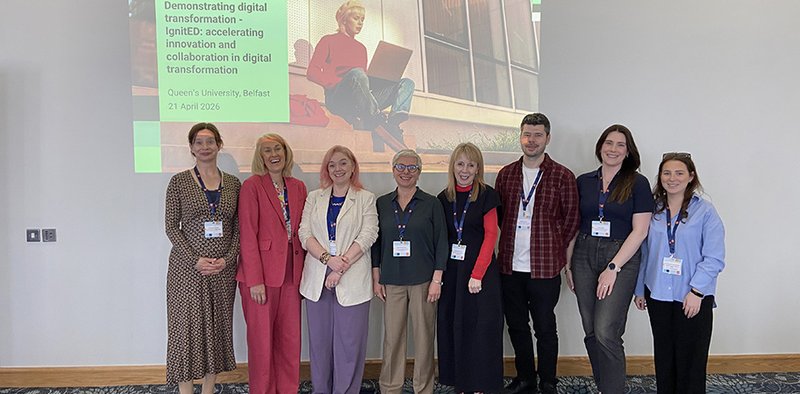
In the afternoon session, participants had the opportunity to join a design sprint to focus on challenges relating to curriculum and assessment reform, AI in education and transnational education. This provided an opportunity to share ideas and work collaboratively to propose solutions to sector challenges across these areas.
The importance of strong digital foundations as a cornerstone of the student experience was highlighted as the university opened a new campus at Gujarat International Finance Tec-City (GIFT City) in India. Our transnational education guidance has been helpful for this university in terms of thinking about the digital experience, ensuring that students enjoy an equitable experience regardless of location.
"It was a privilege to co-host Jisc’s demonstrating digital transformation event and learn from colleagues across the sector. Jisc’s framework and maturity model for digital transformation, has helped inform our strategic approach to transformation, while the beyond blended resources have supported our educational excellence ambitions, from curriculum innovation to strengthening our transnational education offer as we continue to grow our global reach."
—Professor Judy Williams, pro-vice-chancellor for education and students, Queen’s University Belfast
Building digital transformation on strong culture and essential foundations
In order to maximise the investment institutions are making in technology, the underpinning foundations are vital. These include secure and robust infrastructure; seamless flow of data between institutional systems; digitally capable staff and students; and leadership for digital at executive level – all essential components of our framework and maturity model for digital transformation.
This leadership was a core theme of our second event, held at the University of Westminster. We have collaborated with the university for almost two decades, supporting an institution-wide approach to digital capability for staff and students. As a result, the university is well equipped to explore the use of digital and AI and to ensure their graduates are ready for a global digital workplace.
Cross-organisational governance is vital, so that there are champions of digital transformation represented at all levels – whether that's the chief operating officer, estates director, HR director or the university library.
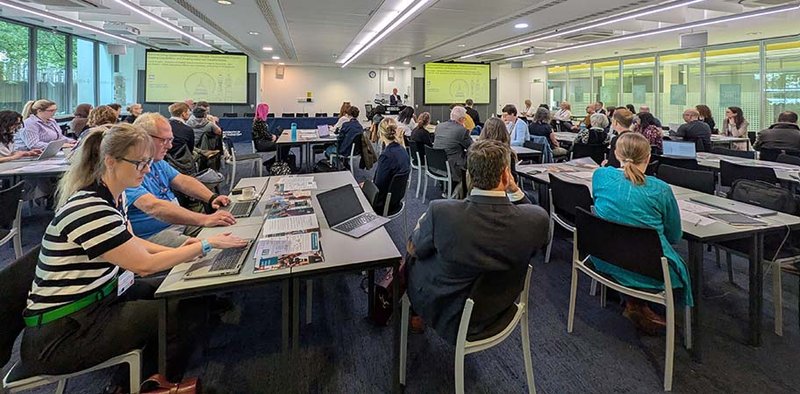
Another strong theme was the university’s close ties with industry, and its efforts to ensure graduates meet the requirements of the employment landscape, as identified in HESA’s Graduate Outcomes report on the effects of new technology on the graduate labour market.
Institutions that are successfully moving forward with their digital transformation, have done so by creating environments where learning and innovation are shared rather than isolated. That includes the need to engage the 'middle majority' – staff who are neither resistant nor leading-edge when it comes to change, but who can ultimately determine whether transformation becomes embedded.
For Jisc and the wider sector, this reinforces that change must be a continuous process that is equitably distributed and widely owned, and it underlines the importance of communities, shared practice and resources, and collaboration across and between institutions to accelerate progress and spread effective practice.
“We were delighted to co-host Jisc’s demonstrating digital transformation event and to showcase the progress Westminster has made on its digital transformation journey. The event created an excellent opportunity for open discussion, collaboration and shared learning across the higher education sector.
“Our long-standing partnership with Jisc has been instrumental in supporting this work, particularly through the use of the digital capability framework, which has underpinned the development of our Westminster Digital Academy for students and our wider approach to digital skills development.
“Jisc’s digital transformation resources, sector knowledge and trusted advice continue to help us navigate change and realise our strategic ambitions for technology-enhanced learning, teaching and organisational transformation.”
—Ian Wilmot, university secretary and chief operating officer, University of Westminster
Co-designing with students, and the importance of student partnership
At the University of Southampton event, there was a very strong focus on digital culture, capability, inclusion, and whole-organisation change. A core organising principle across Southampton’s strategy is the integration of people, process and technology – addressing them not as separate elements, but as a connected system.
A defining message was the importance of students being co-developers and co-creators of the digital environment, and the recognition that digital transformation only succeeds when it works for all users, especially those most at risk of exclusion.
We heard how a 150-strong student co-design panel is involved in creating new initiatives at Southampton, which has invested a significant amount in a large digital transformation programme.
At a time when one in five students now disclose a disability, the university has designed in accessibility from the start, with direct input from disabled staff and students as active co-design partners. A university app, developed with input from 500 students, is designed around the needs of the users, not institutional structures – and data on how it is used informs strategic decision-making.
“Co-hosting the demonstrating digital transformation event with Jisc, alongside CEO Heidi Fraser-Krauss, was a fantastic opportunity to share the progress we are making at the University of Southampton and to learn from colleagues across the sector.
“The event brought our transformation to life, from strategy through to delivery, while using the Jisc framework and maturity model to guide our approach, build a shared understanding, and support more joined-up, user-centred services for our staff and students.”
—Wendy Appleby, vice-president (operations) and Professor Andrew Atherton, vice-president (international and engagement), VC office, University of Southampton
Next steps
- Participate in our 2026 sector digital maturity assessment for higher education
- Explore our digital transformation framework
- Join our senior leaders working group for digital transformation
- Learn about our digital transformation consultancy support
- Join future digital transformation events or programmes